

Energy renovation of buildings: our current position.
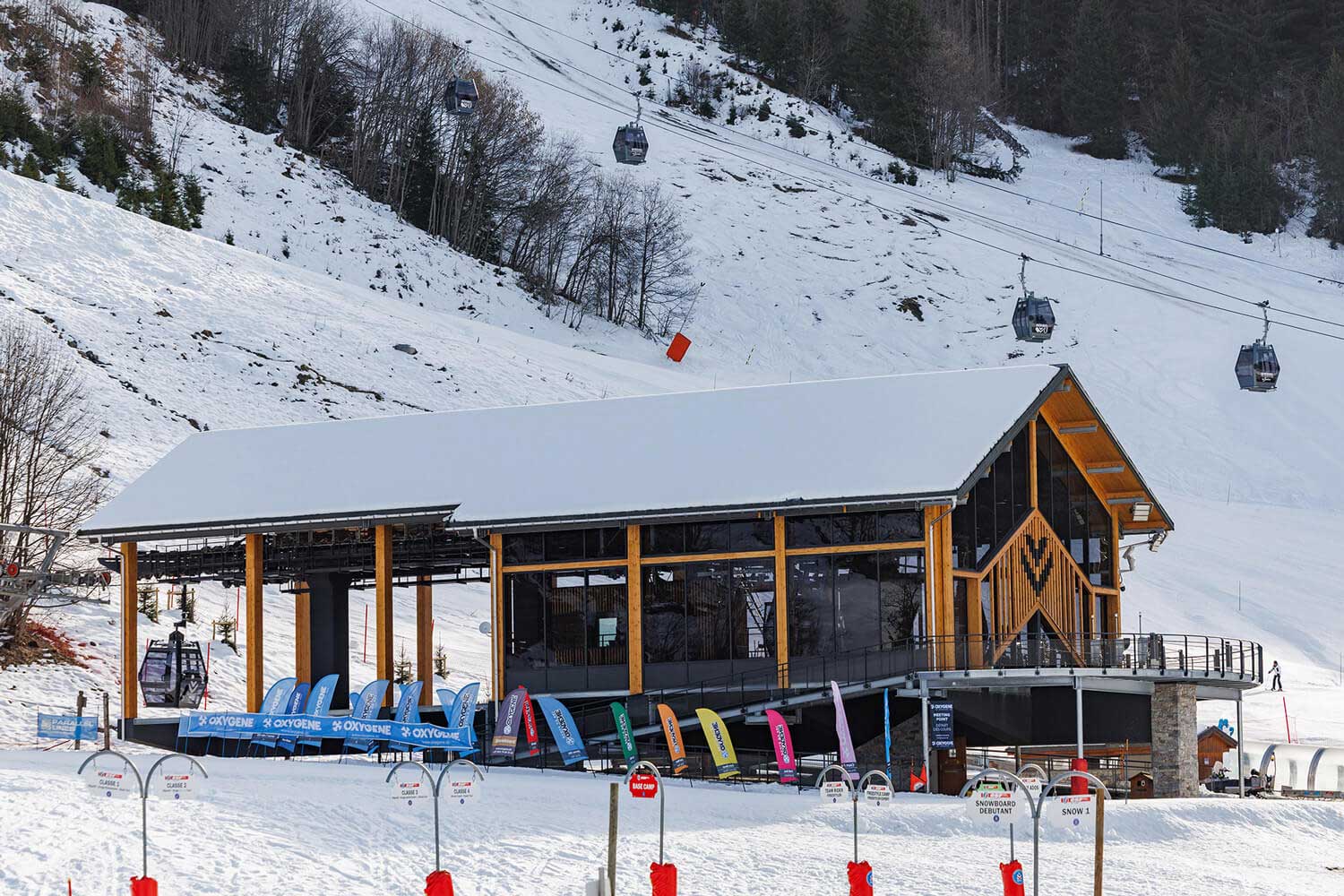
In practical terms, we are at the very beginning of this project. Our buildings are many and varied, including administrative premises, ski lift plant rooms, workshops, piste groomer garages, mountain huts, technical premises for artificial snow production, control rooms, and ski lift stations. They were built over a period of fifty years, in accordance with a wide range of heating and insulation regulations, in high-altitude conditions that make any intervention costly and onerous.
Before any renovation project is undertaken, energy audits are carried out to establish a detailed assessment of energy consumption and heat losses. All four companies have now engaged in this process, although at different stages of progress, allowing them to identify the most effective measures for improving energy performance.
Operational management measures have then been introduced. Building Management Systems (BMS), which automatically adjust heating and lighting according to occupancy levels, time of day and season, have been installed in all lift control stations operated by SETAM, are being deployed by S3V, and are currently being tested by SEVABEL.
Several actions have already been completed, including the construction of the new offices in Mottaret, a new technical building for SETAM, the gradual replacement of conventional light bulbs with LED lighting, and the replacement of radiators with systems that automatically switch off when windows are opened across the different ski areas. Behavioural energy-saving measures have also been introduced, including a target indoor temperature of 19°C in occupied spaces (16°C when unoccupied), reduced heating before staff rest days and the systematic shutdown of unused equipment and chargers.
In 2026, Méribel Alpina launched a comprehensive energy renovation programme covering all of its lift operator chalets. Scheduled to run until 2028, the programme aims to improve both staff comfort and the energy efficiency of these isolated mountain buildings.
That same year, SEVABEL began the energy renovation of its La Croisette building. By improving insulation, upgrading equipment and modernising working spaces, the project aims to sustainably reduce energy consumption while improving staff comfort.
A large-scale thermal renovation programme for the entire building portfolio still remains to be planned and financed. This will include wall and roof insulation, window replacement and the conversion of heating systems to low-carbon solutions. In this area, we acknowledge that the greatest part of the work still lies ahead.