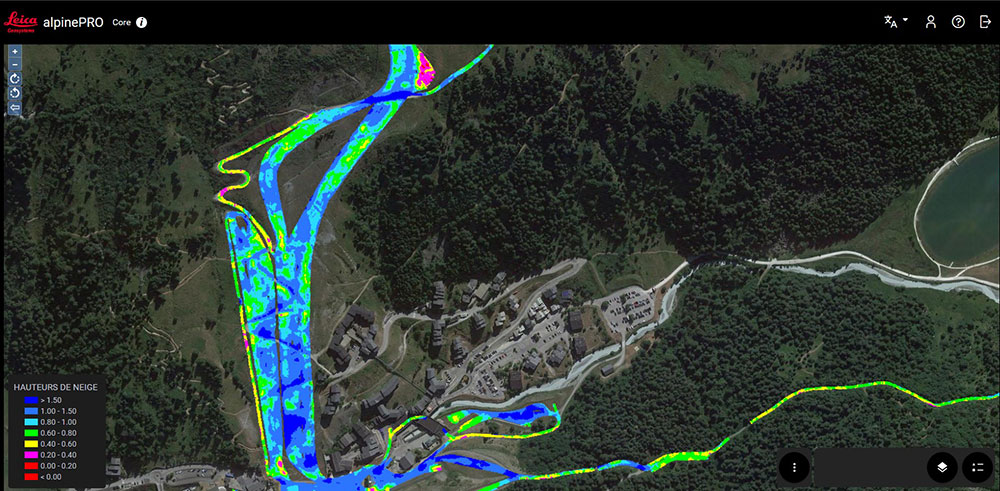
Optimising piste grooming
Snow groomers are equipped with real-time snow depth measurement systems (SNOWSAT on Kässbohrer vehicles and Leica iCON GPS on PistenBully vehicles) that combine centimetre-accurate GPS positioning with digital terrain models to determine the exact depth of snow beneath the vehicle.
In practical terms, operators can see from the cab where snow cover is sufficient and where it is lacking, allowing them to redistribute existing snow rather than produce additional snow. The use of these data can reduce fuel consumption by up to 15% and decrease snowmaking requirements by 5% to 10%.
These efficiencies are complemented by slope improvement works, including the correction of cross slopes, terrain reshaping, the filling of irregularities, revegetation and stone removal. These interventions create smoother surfaces with fewer exposed rocks and micro-reliefs, allowing natural snow to accumulate more effectively and reducing the depth of snow required for operation. According to operational feedback, they can reduce snowmaking needs by 10% to 20%.
However, these summer works require excavators, bulldozers and tractors, and therefore consume diesel fuel. It is important to prioritise areas where the potential snow savings are greatest and where the existing vegetation is already degraded, while systematically restoring vegetation using locally sourced seed mixtures.